Showing posts with label beginning reader. Show all posts

Friday, July 18, 2014

Spotlight on Fiction 2014

Pigsticks and Harold and the Incredible Journey
by Alex Milway

“Pigsticks [is] the last in a noble line of pigs,” but he hasn’t done anything great yet.  After reading about his forepigs, Pigsticks decides to travel to the Ends of the Earth and (“unlike [his ancestor] Colonel Pigslet) . . . make it back alive!”  After a futile search for an assistant, Pigsticks serendipitously meets a small hamster named Harold who is strong, honest, and just what Pigsticks is looking for.

“The job’s yours . . . We shall leave tomorrow, before breakfast!”
“But I’m going to a tea party tomorrow . . . There will be cake.”
“We shall take a cake with us.”
“I don’t mean to be rude . . . but I could never leave before breakfast.”
“We shall take two cakes with us!” (21)

Reluctantly--and only after a promise of three cakes, one of them Battenburg--Harold agrees to the arrangement, and the unlikely pair set off on an adventure.

Pigsticks’ studied inattention, Harold’s penchant for cake, and the dialogue between the two create unpredictable humor and some absurd situations.

An interesting, elevated vocabulary makes this upper-level easy reader a great choice for independent readers who still want shorter stories with plenty of pictures.

*Received Netgalley ebook for review.


Ophelia and the Marvelous Boy
by Karen Foxlee

 “Ophelia did not consider herself brave . . . but she was very curious.  She was exactly the kind of girl who couldn't walk past a golden keyhole without looking inside.” (9)  That keyhole happens to be in a snowy foreign city where her father has just taken a job at the museum. Her mother died three months ago, and since her father is distracted with work, and her sister is moody and distant, Ophelia explores the museum alone.  But the museum is a confusing place with signs pointing the wrong direction and guards that knit, sleep, and yell for no good reason, and of course, that golden keyhole.  Behind the keyhole she finds a 303-year-old boy who claims his name was taken by a “protectorate of wizards from the east, west, and middle . . .” (14) and that he is a prisoner of the Snow Queen.  He needs Ophelia’s help to find a magical sword and the One Other who will know how to wield it.  In short, he needs her to save the world.

Foxlee gives readers a wonderfully wicked villain.  The Snow Queen is “dazzlingly beautiful,” ice cold, deceptively kind, and she smells like hot chocolate. (13)  Eleven-year-old Ophelia Jane Worthington-Whittard is an equally delightful heroine.  She has a pale face, ragged braids, smudgy glasses, and asthma, and she simply refuses to believe in magic.  (Oh, and she likes sardines.) (76-77)

With lyrical writing, an adventure-filled plot, and the triumph of love over misery, this Snow Queen story is everything that a modern-day fairy tale should be.

*Review copy received from publisher.


Half a Chance
by Cynthia Lord

For 12-year-old Lucy Emery, moving to a lakeside cottage in New Hampshire means starting over in a new place again.  While her dad is out of town on another photography assignment, Lucy makes friends with Nate, the boy next door, and together, they spend the summer trying to find the perfect shots for a photo contest that Lucy is determined to win.  They hike a mountain, kayak on the lake, and watch the loons, but when one photograph reveals too much about Nate’s grandmother, it might mean the end of their friendship.

Lucy’s thoughtful observations provide insight into the characters and the human experience.  For instance, Lucy’s thought that kids “care a lot about other people, but most times . . . don’t have the power to change things for them” rings true. (71)  And her reaction to meeting new people (“Practice only makes familiar . . . Never easy.”) made me stop and think what many introverts might think: “Yep! That’s exactly right!” (6)  The sometimes difficult subjects of aging and dementia are treated in a candid, yet sensitive way.

This is a perceptive story about new beginnings, saying goodbye, and all the moments captured in between.


Revolution
by Deborah Wiles

Segregation is a way of life in Greenwood, Mississippi, so 12-year-old Sunny Fairchild doesn't think much about why only white people go to the movies at the Leflore, or why no black children swim at the city pool, or why the only black woman at church is not a congregant, but a nursery assistant.  Besides, Sunny has worries of her own: her mother left when Sunny was a baby and her father’s new wife and children are “stuffed” into her home (80).  But this summer--the summer of 1964--agitators from the North are invading Mississippi, bringing big changes to the South, and as Sunny learns to look beyond her own concerns, she finds herself changing, as well.

Wiles uses Freedom Summer--the summer when 1,000 volunteers descended upon Mississippi and worked in a coordinated effort to empower black residents by registering them to vote--as the setting for her story. 

Revolution is the second book in The Sixties Trilogy, and as in the first book, period photographs, music lyrics, speech excerpts, and brief biographical sections are inserted between pages of story.  The factual--LBJ, Muhammad Ali, the Beatles, escalation of the war in Vietnam, and the murder of three Freedom Summer volunteers--intersects with Sunny’s fictional story, enhancing both and creating a memorable read.
This summer marks the 50th anniversary of Mississippi’s Freedom Summer.  RevolutionFreedom Summer by Susan Goldman Rubin and the young adult book, The Freedom Summer Murders by Don Mitchell are all excellent for exploring this pivotal period in our nation’s struggle with civil rights.

Thursday, December 12, 2013

danyelle recommends Me Too by Valeri Gorbachev

Some of life's best moments are simple ones, yet they can also be elusive because emotional richness and simplicity can be difficult to capture simultaneously.  That is why I particularly admire a book for emerging readers, like Me Too! by Valeri Gorbachev, that captures an everyday moment and imbues it with depth, and does it in a way that is easy to read.

This story begins on the title page with an eager Bear and Chipmunk watching the snow fall outside their window and welcoming readers into their world.  Then with a page turn, readers are drawn inside the warmth of their home.
 "I love snow!" said Bear.
"Me too!" said Chipmunk.
This first page sets up the rest of the story with Bear talking about their activities and Chipmunk echoing, "Me too!" each time.  The picture of snow shovels (I love the tiny one!), ice skates, and skis lined up on the wall also gives readers a preview of what is coming next.

The two friends dig a path out of their house, make a snowman, ice skate, ski, and return to their cozy home to sit by the fire. Young readers will laugh as Chipmunk flies through the air behind Bear's snow shovel, when he skis down a hill and lands head first in the snow, and when he and Bear fall on their backs while skating.  And they'll understand the warmth that exists between the two friends.

After a day in the snow, Bear and Chipmunk tuck into their warm beds, and this time Chipmunk's echo changes.
"Sweet dreams," said Bear.
"You too!" said Chipmunk.
The moon in attic windows draws the reader's eyes across the page, and with the final page turn, the reader is once again outside looking at the glowing lights through the window.

Unlike traditional easy-to-read books, this book is the shape and size of a picture book which makes it perfect for the earliest reader and an adult to share together.  The repetitive text  uses only 39 unique words (most of which are sight words).  Expressive, watercolor illustrations tell the story, and children will probably "read" the story through the pictures more than words.  There is nothing complicated here, just a satisfying story simply told.

I received a copy of this book from the publisher for consideration as a Cybils Finalist.

The opinions expressed are my own and do not necessarily reflect those of other Cybils panelists.

Me Too!
An I Like to Read Book
by Valeri Gorbachev
published by Holiday House
July 2013
Recommended for ages 4-7

Tuesday, December 10, 2013

danyelle recommends Mr. Putter & Tabby Drop the Ball

I've come late to the Mr. Putter & Tabby books by Cynthia Rylant.  For some reason, until recently, I had not read even one book in the series.  Yep, that’s almost 20 years and 22 books, and even though I've taught six of my children to read, I had, somehow, missed every book.  Until now.

When Mr. Putter & Tabby Drop the Ball was nominated for a Cybils Award, I picked it up expecting (unfairly, I might add) a rather stale, late-in-a-series story.  I was surprised and delighted to find just how wrong I was.  Deciding that I had neglected this series long enough, I took a quick trip to the library and checked out a stack of books.  Now after reading through eight books, I've found new characters to love and old books to share.  Although I enjoyed all the books I read, Mr. Putter & Tabby Drop the Ball is still my favorite.

Mr. Putter and his “fine cat” Tabby love to nap, but they seem to be napping all the time, so Mr. Putter decides they need a sport.  His neighbor, Mrs. Teaberry knows of a baseball team that will be just right for him--the Yankee Doodle Dandies--and when Mr. Putter expresses concern about being too old, Mrs. Teaberry offers to join the team with him.  They arrive at the ballpark, leave Tabby and Mrs. Teaberry's dog, Zeke, on the sidelines, and take their places on the field.  But Zeke doesn't want to be a spectator, so despite being told to “stay,” he runs onto the field and grabs the ball.  Just when it seems like Zeke’s mischief will cause the Yankee Doddle Dandies to lose, he finds a helpful way to be part of the game.

Told in five short chapters, this book is just what an easy reader should be.  Short sentences with easy-to-read vocabulary (most of which newly independent readers will recognize) are surrounded by plenty of white space.  Repetition in the text creates rhythm and familiarity.   Personality-filled illustrations with bold lines and bright color help pace the story by alternating between spot art and double-page spreads.  And they add detail--check out the trading cards at the end of the book.

But the best thing about the book is that it is funny.  Glimpses into Mr. Putter’s thoughts make Zeke’s antics comical, largely because of Mr. Putter’s silent predictions. 

“Let’s go play,” said Mrs. Teaberry.
She looked at Zeke.
“Stay,” she said, patting Zeke’s head.
Mr. Putter looked at Zeke.
No way, Mr. Putter thought.

Illustrations like those of Mr. Putter covering his eyes in exasperation (“Mr. Putter couldn't watch.”) or standing helpless with the ball on the ground in front of him (“Mr. Putter tried to bend down.  But his knees said, No way.”) contribute to the humor that makes this book engaging.

Hats off to you, Ms. Rylant for putting well-loved characters into a fresh, new story.


I received a copy of this book from the publisher for consideration as a Cybils Finalist.

The opinions expressed are my own and do not necessarily reflect those of other Cybils panelists.

Mr. Putter & Tabby Drop the Ball
by Cynthia Rylant
illustrated by Arthur Howard
published by Harcourt Children’s Books
September 2013

Friday, July 19, 2013

Spotlight on Easy Readers

Penny and Her Marble
by Kevin Henkes

This is the third book in Kevin Henkes’s new series of easy readers featuring Penny.  Each successive book in the series is a little longer than the previous one (the first book with two chapters, the second with three chapters, and this one with four short chapters).  And each book widens the view of Penny’s world -- starting with her home, then her garden, and now in Penny and Her Marble, she goes out into her neighborhood.

Penny is walking with her doll, Rose, when she spots a marble that looks just “like a piece of the sky” in Mrs. Goodwin’s yard.  The marble seems to say, “Take me home,” so Penny picks it up, puts it in her pocket, and rushes home.  But once she gets home, she starts to feel guilty.  Really guilty.  And she has to decide what to do about it.  While her parents are concerned, they are never intrusive, leaving Penny to solve the problem on her own.

Henkes is a genius at capturing childhood imagination and concerns.  We see that here as Penny turns a walk in her neighborhood into a trip to the city and a stroll in the forest, and her worry about the blue marble spoils her dinner and invades her dreams.

Watercolor and pen illustrations show Penny’s range of emotions from excitement and happiness to worry and fear.

Penny is a delightful character -- one that young readers will love.


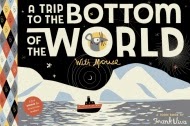
A Trip to the Bottom of the World with Mouse
by Frank Viva

Mouse and a boy take an ocean voyage to Antarctica that is filled with grand views and animal sightings in this easy reader.  In the middle of all the adventure, Mouse, like the quintessential travel-weary child, wants to know, “Can we go home now?”  His repeated question, “Can we go home now?” adds giggle-inducing humor and a comforting predictability to the text.

Full pages alternate with pages broken into four panels where short questions and quick, silly answers keep the pace brisk.  The story is told entirely in dialogue, and pictures in many of the speech bubbles will aid new readers with unfamiliar words.

We know the trip has been a success when as the travelers sail homeward across the final endpapers, Mouse changes his question: “Can we go back there soon?”

Friday, April 19, 2013

tara recommends Penny and Her Marble by Kevin Henkes

So often we look for something new, something unique, something we've never seen before.  It is exciting to be surprised by a punchline or a new style, but there is something even more thrilling in the surprise of new things that feel familiar.  Kevin Henkes uses his unique style to tell a nuanced story in his Penny books.  In some ways, the plot lines feel very simple (typical of any beginning reader) - but, when you really look at them, you see how cleverly he has introduced his characters and their personalities.  They are reminiscent of the classic Francis or Frog and Toad stories - books that tell real stories with relatively complex characters.  


Penny and Her Marble is another excellent addition to the series.  The third Penny book (and also the longest) follows Penny as she finds a "shiny, blue marble" in her neighbor's yard . . . and takes it home.  The marble was smooth and fast and pretty - but, Penny starts to worry that it really belongs to someone else.  Her internal struggle is masterfully handled as Penny tries to figure out what to do with this marble.

It seems unbelievable that Kevin Henkes didn't win the Geisel award last year with his first two Penny books, but hopefully he can nab it this year with Penny and Her Marble.  It may not be the most flashy or loud beginning reader, but it certainly is my favorite of the year so far.

This quiet story is one that will stay with you and is also completely relatable.  I would think most children have, at one time or another, taken something (or found something) that didn't belong to them.  We can only hope they would have a similar pang of conscience and learn from Penny.

Even though these books are clearly marketed to girls (I love the flowery covers), even boys should appreciate the well-told stories and fun pictures.

Penny and Her Marble
by Kevin Henkes
Published by Greenwillow Books
March 2013

Monday, November 5, 2012

Picture Books -- Day 4


Boy + Bot by Ame Dyckman is one of my kids' favorite picture books from this year.  I think that its popularity at our house may have something to do with the corny voice I use for the robot, but really, when a character says things like, "Affirmative!" and "Did-you-malfunction?" his voice begs to be read in "robotspeak".

When a boy and a robot meet, they become instant friends and spend the day playing outdoors until a rock bumps the robot's power switch and he shuts down.  Concerned, the boy takes his new friend home and tries to help him.  Another accidental bump turns the robot on in the middle of the night, but now the boy is asleep, so roles are reversed as the robot takes the boy home to fix him.  All is put right in the end, and we see a joyful double-page spread filled with scenes of the two together.

Dan Yaccarino's bright gouache paintings bring the robot to life, giving depth to the friendship.  And I love the humor in the details: the boy sipping his soda, while the robot sips his oil; and the robot trying to oil the boy's ear.

With short snappy sentences and only a handful of words per page, this energetic picture book can be enjoyed by early independent readers as well.

Boy + Bot
by Ame Dyckman
illustrated by Dan Yaccarino
published by Alfred A. Knopf
April 2012

Wednesday, October 3, 2012

Link to It: Dewey Decimal Debate

I find my feelings divided over the disappearance of the Dewey Decimal System.  On the one hand, I can see children checking out more nonfiction books if they can browse them easily by topic.  And, at our library, folktales and poetry seem to be overlooked because they are stuck with the "numbered books" that parents and children don't browse through as often.  However, when we go to the library, we aren't usually looking for books about a certain topic,  but we do regularly go in search of books by an author whose other books we have enjoyed.  I sure would like to visit the Ethical Cultural Fieldston School and see their new system in action.  You can read an article from School Library Journal about it here.

I love Kevin Henkes' new easy reader, Penny and Her Doll, and was happy to read that he has a new Penny book coming out next year.  Read about it here.  (Thanks to PW Children's Bookshelf for the link.)

Sunday, September 30, 2012

Dive Into Reading with Mo Willems

A couple of weeks ago, I went to a book signing at The King’s English Bookshop, where Mo Willems read his new book, Goldilocks and the Three Dinosaurs.  It is always a treat to hear an author read their own books, and he was no exception.  He was funny and quirky, a true representation of the books he writes and the line around the block was proof of his broad appeal to kids and adults.

We love Mo Willems' books at our house.  It started with Knuffle Bunny (pronounced k-nuffle), we added Edwina, the Dinosaur Who Didn't Know She Was Extinct and Leonardo the Terrible Monster.  Then we picked up Naked Mole Rat Gets Dressed and Hooray for Amanda & Her Alligator!.  Last year for Mother's Day, the kids presented me with The Duckling Gets a Cookie!? and with a new reader in the house, we are now collecting the Elephant & Piggie books.

REALLY?!?  How many Mo Willems books do we need?  I guess the answer is very simple . . . supply and demand.  The kids love them, thus we will continue to fill our shelves.  I have had I Broke My Trunk on my shelf for over a year and thought it was cute, but didn’t think I would be rushing out to buy more.  Then I read it with my 5-year-old.  Or, rather, she read it to me.  She laughed out loud and wanted to read it again. 

What is it about Mo Willems that is so compelling?  When I looked at the sheer volume of Elephant and Piggie books, I just shrugged them off as being a little gimmicky – but now, I own 6 of them and we are excited for the new arrival, Let’s Go for a Drive, that comes out next month.

Where Dr. Seuss has rhymes, Mo Willems has mini plays.  He is accomplished at making you feel like you are watching a show, and if you could put just down the book, you could act out the scenes yourself.  Elephant and Piggie become these compelling and real characters who are just going about their day, living their lives – and when funny things happen, you get to watch!

These books are a little long (57 pages), but with good repetition and bursts of unexpected humor – it works.  The interaction between Gerald and Piggie is accomplished entirely with speech bubbles.  There are no unnecessary “he said” or “she said’s.”  The pictures show the action and the speech bubbles convey the rest.  There is no doubt about how Piggie is feeling when she yells,  “HOW DID YOU BREAK YOUR TRUNK!?!” with arms flapping in complete frustration or the embarrassment of Elephant when he finishes his story and says “. . . and broke my trunk.”  

These are not sterile stories.  Even the youngest readers are drawn into reading with emotion as the font size changes to extra big (for emphasis) or extra small (for shyness) and italics are added.  Whether you are a little withdrawn and careful like Elephant, or you are creative and bold like Piggie, you are sure to find something to smile about.   

*If you have never picked up an Elephant & Piggie book, I recommend I Broke My Trunk! or Can I Play Too? (my 5-year-old also loves Happy Pig Day!).   

Monday, September 3, 2012

danyelle recommends Penny and Her Doll by Kevin Henkes

Because I have a kindergartner who is learning to read, I have recently spent a considerable amount of time with easy-to-read books, so I was delighted to learn that Kevin Henkes, author and illustrator extraordinaire, had created two new books for these young readers: Penny and Her Song and Penny and Her Doll.  With a trim size typical of easy readers, each book combines plenty of illustrations, short lines, repetitive text, and ample white space to make a story accessible to beginning readers.  Even better than that, these books are fun to read.

In Penny and Her Song, Penny comes home from school excited to share her new song with her family, but she is interrupted at each attempt by Mama and Papa telling her the babies are asleep.  As she waits in her room, trying unsuccessfully to sing to herself, the repetition that dominates the first few pages is broken, and the pace of the story slows, intensifying the feeling of waiting for the reader. Penny’s frustration and growing impatience are evident as she moves her glass animals around on her dresser and makes faces in the mirror.  After dinner, when Penny finally gets to sing her song, the family joins in, with even the babies singing “in their own baby way.” Now she has a chance to shine as they sing and sing and sing together, and Penny enjoys her parents’ attention.

Penny and Her Doll begins with Penny and Mama working in the garden where Mama finds weeds, while Penny finds flowers.  The mailman brings Penny a package containing a doll from Gram. 
           
            “The doll had pink cheeks.
            The doll had a pink bow.
            The doll had a pink dress
            with big buttons.”

Penny loves her new doll, and the illustrations of Penny holding and hugging her doll mirror those of her parents with the babies.  I love the family dynamic in this story.  Mama and Papa are supportive, and when Penny needs a name for her doll they are even a little helpful, but the focus is always on Penny, and ultimately she is the one who must solve her own problem.  When she finally does, she beams, and I couldn’t help but smile with her.

These are two books that will be well-loved at our house.  I sure hope that Mr. Henkes has a few more Penny stories to tell.

Penny and Her Song
by Kevin Henkes
published by Greenwillow Books
February 2012

Penny and Her Doll
by Kevin Henkes
published by Greenwillow Books
August 2012

Recommended for ages 4 - 8

Saturday, August 11, 2012

tara recommends Brand New Readers

Summer is quickly drawing to a close and that puts one thing on my mind – school.  I have had many years of having the kids all to myself, but, soon my five-year-old will be off to new adventures in the classroom – and not wanting to send her unprepared, we have amped up our reading endeavors. 

There seems to be a gap between learning your letters and diving into the early reader books that I remember from my childhood (Frog and Toad, Danny the Dinosaur, etc.).  It can just be painful when it is a struggle to sound out every word on the page and there is so much text.  Luckily, this summer we found a solution.

The Brand New Readers are small, thin paperback books that seem unsubstantial at first glance, but they serve their purpose very well.  Each box contains 10 different books, as well as a chart and stickers to map progress (which I have to admit, we have never used, but they look like they may be useful). 

I would not expect any genius story lines or witty dialogue, but the great thing about these books is their somewhat predictable text (the pictures tell the story) and with the minimal word count, they don’t require nearly the attention span of the longer early readers.  As an added bonus, they are also short enough to read to a busy Daddy!

After burning through almost 3 boxes, now my daughter has moved on to the harder and more word-heavy easy readers.  Luckily, now she is much more confident and has more patience to read the longer sentences!